
Chicago · Cook & DuPage County
Trenchless sewer repair in Chicago, IL
Most Chicago sewer lines can be relined or replaced through two small access points instead of a trench across the basement floor. It does not work on every line.
- Free written estimate
- No obligation
- 5 suburbs plus the city
Lot depths vary across Chicago, so the distances change from block to block. The point where responsibility changes hands is fixed by where the public way starts.
Does trenchless sewer repair actually work?
On most Chicago laterals it does, and on some of them it does not. Trenchless means the new pipe goes in along the path the old one already took, reached through two openings instead of a cut the length of the run. One opening is usually at the building, at or near a cleanout that is already in the basement floor. The other is out near the parkway or the walk. Everything between them happens underground.
What decides it is the state of your line rather than the crew working on it. A liner wants a host pipe that still holds its shape; where the shape has gone, the answer is pipe bursting or one section of sewer line repair. That is not a call anybody can make standing in your front garden, which is why the first job is a camera in the line and why most of what follows on this page begins there.
Chicago adds a question most cities do not. Part of your lateral runs under the public way, and the City may repair that part at no cost to you if the conditions in the diagram above are met. That boundary moves the moment you cross a village line: Oak Park stops the owner's stretch at the curb line, Evanston puts the parkway and the street on the owner, and the other three suburbs each answer it their own way.
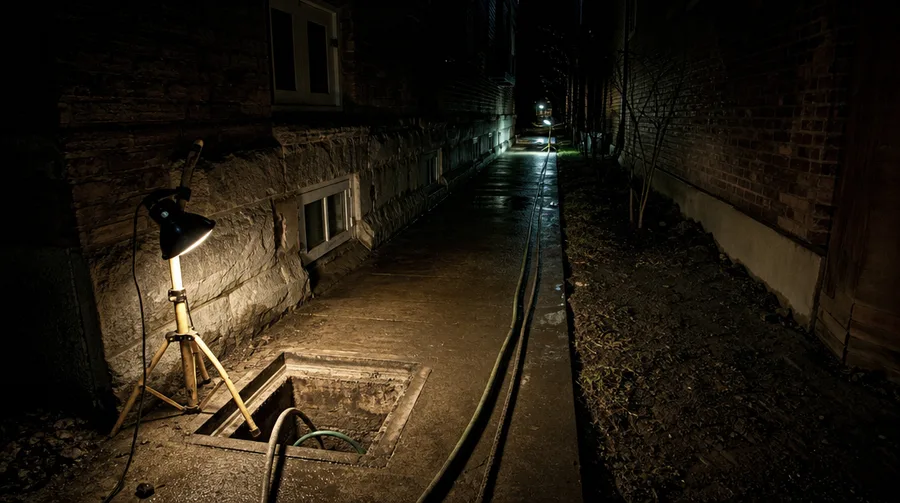
How the work is done
Four ways a Chicago sewer line gets fixed
 Sewer Line Repair One bad section of clay or cast iron is the usual answer. A camera tells you whether the rest of the run is worth keeping.
Learn more
Sewer Line Repair One bad section of clay or cast iron is the usual answer. A camera tells you whether the rest of the run is worth keeping.
Learn more
 Sewer Pipe Lining CIPP cures a new pipe inside the old one. It works on a cracked line that still holds its shape, and on nothing else.
Learn more
Sewer Pipe Lining CIPP cures a new pipe inside the old one. It works on a cracked line that still holds its shape, and on nothing else.
Learn more
 Pipe Bursting The answer when there is nothing left to line. A bursting head splits the old pipe outward and pulls the new one in behind it.
Learn more
Pipe Bursting The answer when there is nothing left to line. A bursting head splits the old pipe outward and pulls the new one in behind it.
Learn more
 Camera Inspection The first job, not an add-on. In Chicago the video is also what the City asks for before it will review a private drain repair.
Learn more
Camera Inspection The first job, not an add-on. In Chicago the video is also what the City asks for before it will review a private drain repair.
Learn more
What trenchless sewer repair cannot fix
Three conditions rule it out, and none of them is unusual in this city.
Start with a line that has nothing left to work with. Both trenchless methods need a path through the old pipe: a liner needs a host to cure against, and a bursting head needs a rod string pulled back along the line. Where a section has caved in and filled with soil, that path has to be made before either method is on the table.
Then there is grade. A trenchless repair puts new pipe on the old alignment, so whatever fall the line was laid at is the fall it keeps. A lateral that settled and now holds water in one spot will still hold it there afterwards, in a newer pipe. On the video that shows up as a pool which never drains, and it is the finding most worth arguing over before a quote gets signed.
The last one is what the line is for. Putting the same diameter back along the same route keeps whatever was already wrong with the route, so a lateral that was undersized for a building which has since gained two bathrooms is a design problem, not a repair.
None of that is an argument against the method. It is the list that a quote should have dealt with already, and it is missing from almost every competing page in this market for a straightforward reason: they all sell trenchless. The longer case against it is worth reading before you agree to anything.
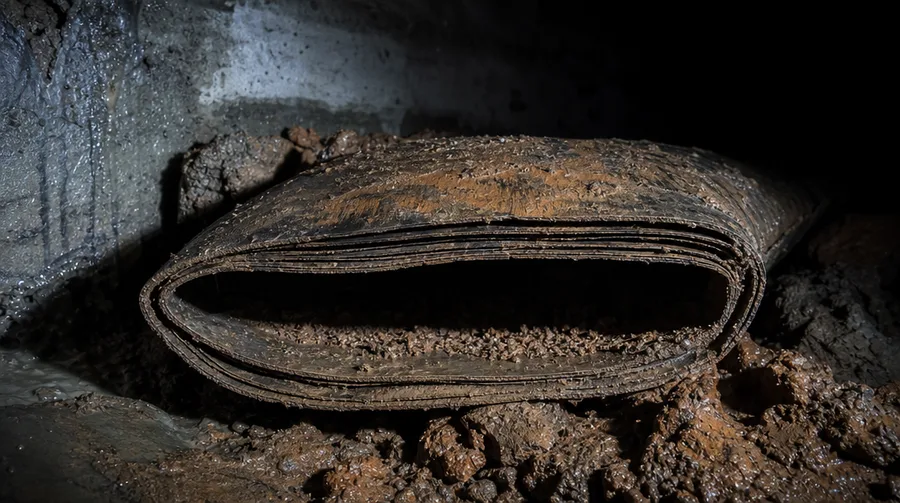
Is trenchless sewer repair cheaper?
Per foot of pipe, usually not, and the saving was never in the pipe anyway. It is in what nobody has to put back afterwards, which on a Chicago lot is where the money sits: a finished basement slab, a hundred-year-old parkway tree, a public walk, or the street itself. Where the ground above the line is expensive or impossible to open, trenchless wins on the total bill while losing on the plumbing. Across an open side lawn the two are closer than the marketing suggests, and that is a fair thing to ask about before the work is booked.
Nothing on this site quotes a figure, here or anywhere else on it. The number comes from whoever prices the job, and one invented on a web page would be worth nothing to you. What we can tell you is what has to be in a quote before two of them can be compared at all:
- The method named: lining, bursting, or an open repair of one section
- The length of pipe covered, and where along the run it starts and stops
- Reinstatement of every branch that joins the section being worked on
- Restoration of whatever gets opened, including the walk and the parkway
- Who is expected to pay for the stretch under the public way
The last one is the line most quotes leave out, and it is the one the diagram at the top of this page draws. What the numbers themselves tend to look like is covered in the guide to what sewer work costs in Chicago.
The questions this trade tends not to answer
- Can you repair a sewer line without digging up the yard?
On most lines, yes, and the ground between the two access points stays where it is. It is not a promise anybody can make before the line has been filmed. A line that has caved in has to be reached somehow, and a line with no usable cleanout needs one made before anything else happens. Ask to see the footage yourself, not a summary of it.
- How long does a trenchless sewer repair last?
Longer than the pipe it replaced, which is the honest version, and we publish no number of years because no publisher we would cite has one for a residential lateral. What decides it is what the old line failed from. Roots at a joint are dealt with by taking the joints out. Ground movement and a bad fall are not, since neither method lifts the pipe or re-lays it to a new grade. Ask what the video showed, and what that implies for the next twenty years.
- Will trenchless work damage the yard, the walk or the driveway?
Two openings come out of the ground, so something is disturbed. The question is what, and where. A pit sited at an existing cleanout inside the basement takes nothing above ground at all. A pit at the parkway end sits in grass or in the walk, and a mature parkway tree is a reason to move it rather than a reason to give up. What does not happen is a cut the length of the run, which is what open replacement means on a Chicago lot.
- Is trenchless sewer repair worth it on an older Chicago house?
Chicago housing stock is why the method is common here. Vitrified clay laid in short jointed sections is close to the ideal candidate for a cured in place liner, and post-war Orangeburg that has gone oval is close to the ideal candidate for pipe bursting. What makes it worth doing is rarely the pipe on its own. It is the finished basement, the mature tree or the street sitting on top of it.
- How long does the work take from the first call?
The camera run is usually the same week and takes an hour or two. The repair is a day for most lining and bursting jobs on a single lateral, plus whatever the permit takes. A job that turns out to sit under the public way then runs on the City's schedule, and anyone quoting you a timeline before the line has been filmed is quoting a guess.
- What happens when I ask for an estimate here?
This site is a lead matching service. The request goes to a sewer contractor working your part of Chicago or the suburbs, and the estimate comes from them, in writing, with no obligation. We are not the ones who do the work and we hold no plumbing license ourselves, which is why nothing on this site quotes you a price. The City publishes a searchable register of licensed plumbing contractors, and looking up whoever turns up is a reasonable thing to do.
Find out which of the four your line is a case for
Send the address, the age of the building and what the drain is doing. What comes back is a written estimate from a sewer contractor who works your part of the city, and the first thing on it is a camera in the line rather than a method chosen off a page.
Free, written, and no obligation. We answer requests the same day.